
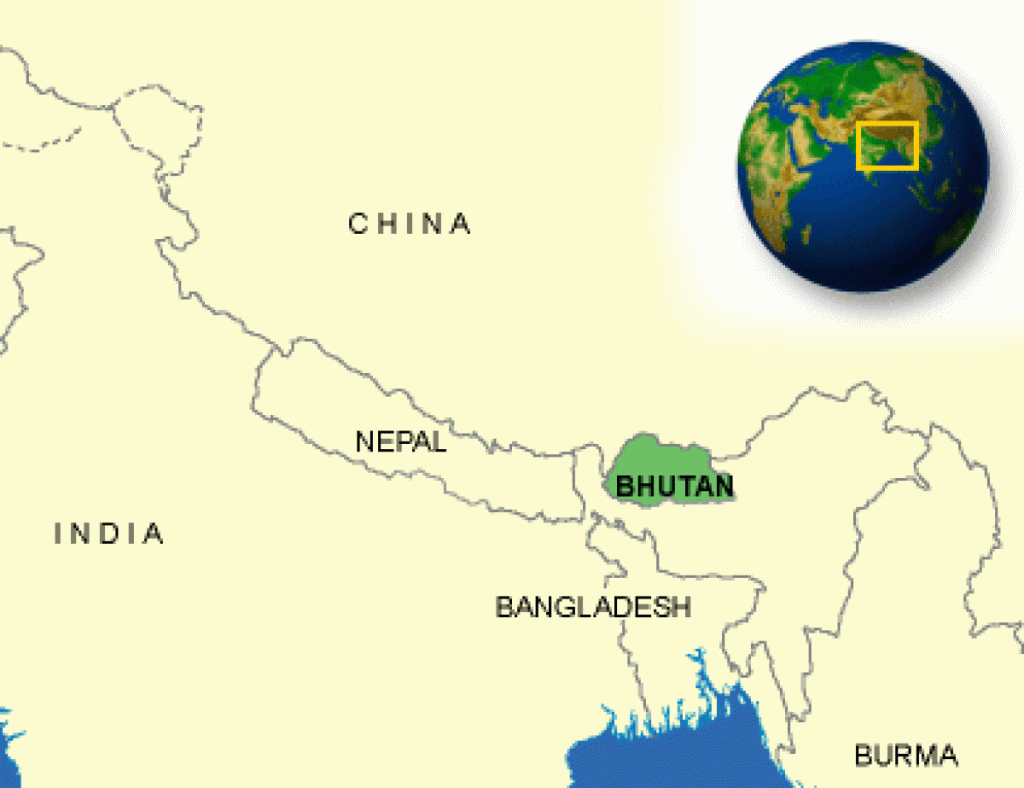
Nestled in the majestic Himalayas, Bhutan is strategically located between two of the world’s largest economies, India and China. This unique position not only influences its economic and political relationships but also enriches its cultural tapestry. Despite its small size, Bhutan has managed to preserve its rich traditions and maintain a distinct national identity. Its geographic location offers stunning natural landscapes and a diverse ecosystem, making it a unique blend of serenity and strategic importance in South Asia.
For centuries, the rich blend of culture and traditions of our extraordinary and unique nation, Bhutan, remained cloistered in the lofty ranges of the Himalayas. Our country, known as Druk Yul, is home to approximately 700,000 people who live in harmony with nature and maintain a unique cultural identity based on our historical and religious heritage. Today, visitors from around the world are fascinated by the countless spectacular wonders of our land.
Bhutan is steadily earning fame as the last Vajrayana Buddhist nation on earth, known for its uncorrupted culture, mostly undisturbed virgin habitats, and the magnificence of its towering peaks and lush green valleys. In many ways, our country remains a fascinating land, preserved in the face of both the advancements and challenges of modern technology. We invite you to experience the serene beauty, vibrant traditions, and the warm hospitality of Bhutan
National Flag
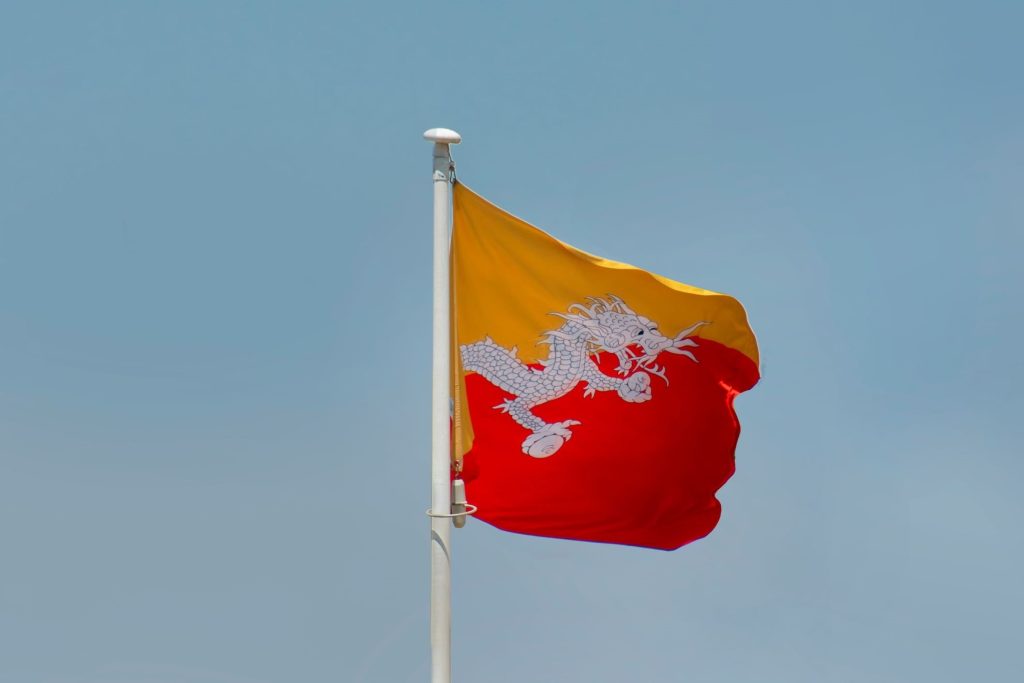
The flag of Bhutan is divided diagonally into two parts: yellow on top and orange on the bottom. In the middle is a white dragon called the Druk, facing the right side. The yellow represents the king’s authority, while the orange symbolizes Buddhism. The white dragon, holding a jewel in each claw, stands for purity and protection. This design reflects Bhutan’s balance between its spiritual and royal traditions.
The flag of Bhutan is divided diagonally into two parts: yellow on top and orange on the bottom. In the middle is a white dragon called the Druk, facing the right side. The yellow represents the king’s authority, while the orange symbolizes Buddhism. The white dragon, holding a jewel in each claw, stands for purity and protection. This design reflects Bhutan’s balance between its spiritual and royal traditions.
The People
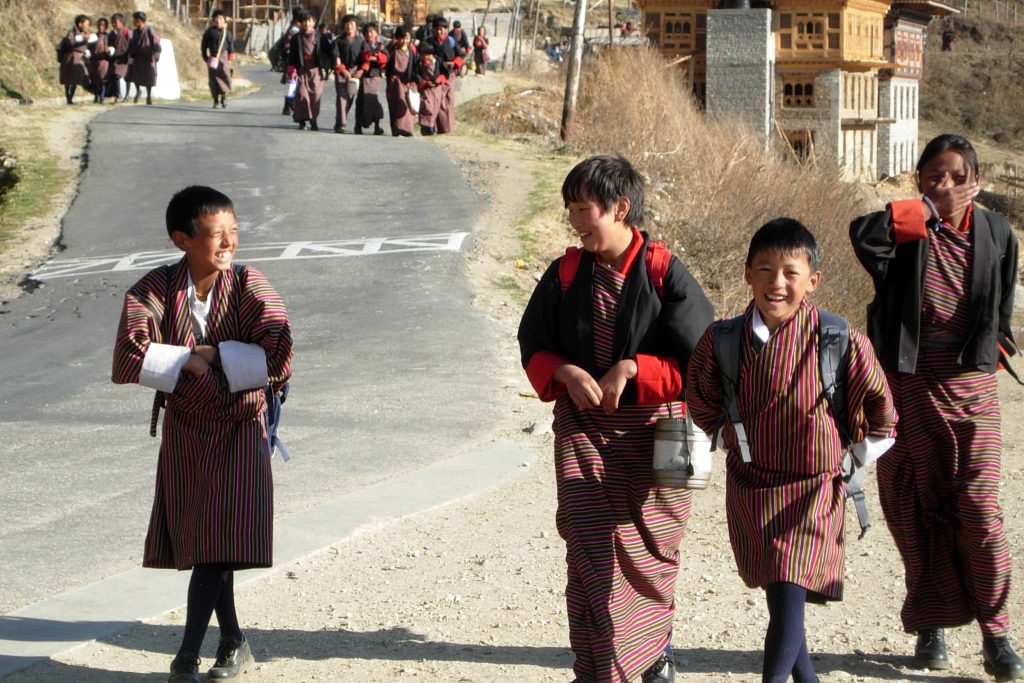
The people of Bhutan embody a profound sense of familial unity and hospitality, living in harmony with their rugged Himalayan environment. Nearly 70 percent of Bhutanese engage in subsistence agriculture, residing in scattered villages where rice, wheat, buckwheat, and maize are cultivated on narrow terraces etched into the steep slopes.
Historically isolated in remote valleys, the Bhutanese have developed a strong sense of individuality and self-reliance, which has given rise to a rich tapestry of languages and dialects despite the country’s modest population. Renowned for their physical resilience, independence, and warm sense of humor, the Bhutanese are deeply rooted in social values that emphasize hospitality and community spirit.
National Bird

The national bird of Bhutan is the raven, an intelligent and majestic bird distinguished by its glossy black plumage. Inhabiting the mountainous regions of Bhutan, the raven holds deep cultural and spiritual significance, symbolizing the protector deity Mahakala.
This revered bird is also closely linked to the Bhutanese monarchy, prominently featured on the Raven Crown worn by the kings of Bhutan. Protected by law, the raven represents not only power and authority but also the rich cultural heritage and traditions of Bhutan.
National Animal
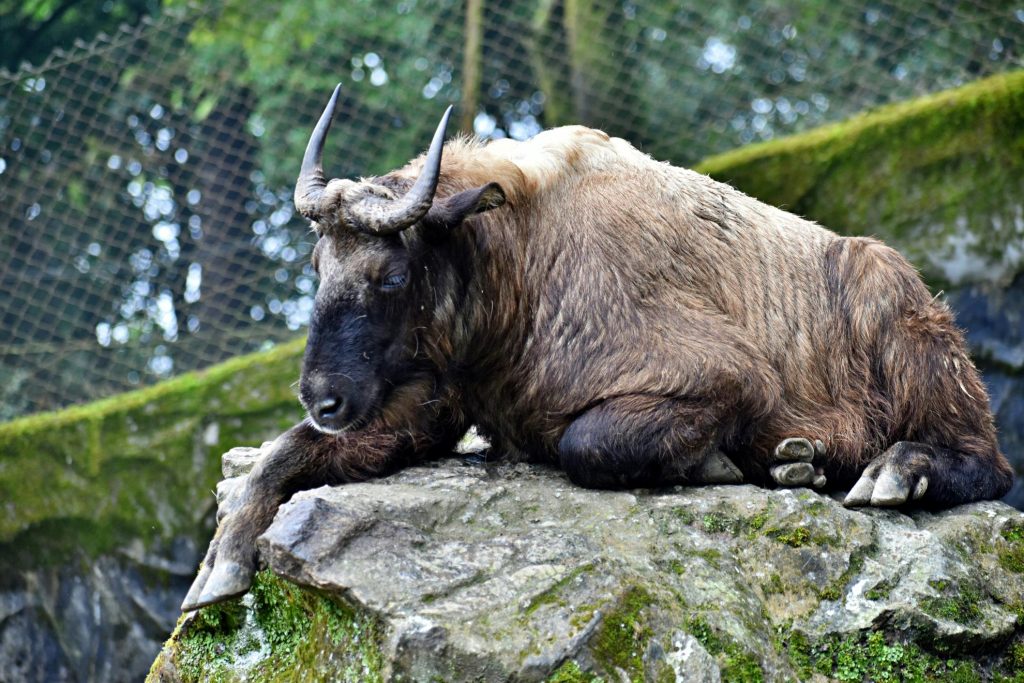
The national animal of Bhutan is the takin, a large, stocky herbivore with a goat-like face and thick, golden-brown fur. Inhabiting high-altitude forests and mountainous regions, takins feed on bamboo, leaves, and grasses and are known for their calm nature, often moving in small herds.
Culturally significant, the takin is linked to the legend of Lama Drukpa Kinley, the “Divine Madman,” who is said to have created the animal. Due to its vulnerable status and limited habitat range, the takin is protected by Bhutanese law.
National Flower
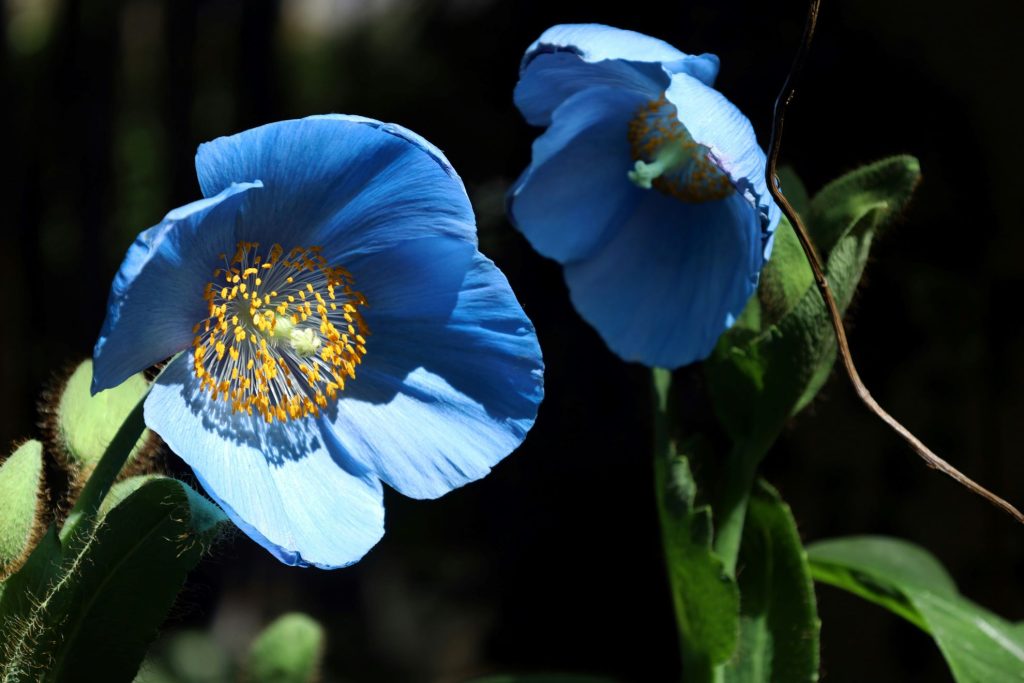
The national flower of Bhutan is the blue poppy, with large sky-blue petals and a yellow center. It grows in high-altitude regions and blooms in summer.
The blue poppy symbolizes purity and Bhutan’s natural beauty. Discovered in the early 20th century, it represents the country’s rich biodiversity and is protected as a national symbol.
Bhutan Gross National Happiness
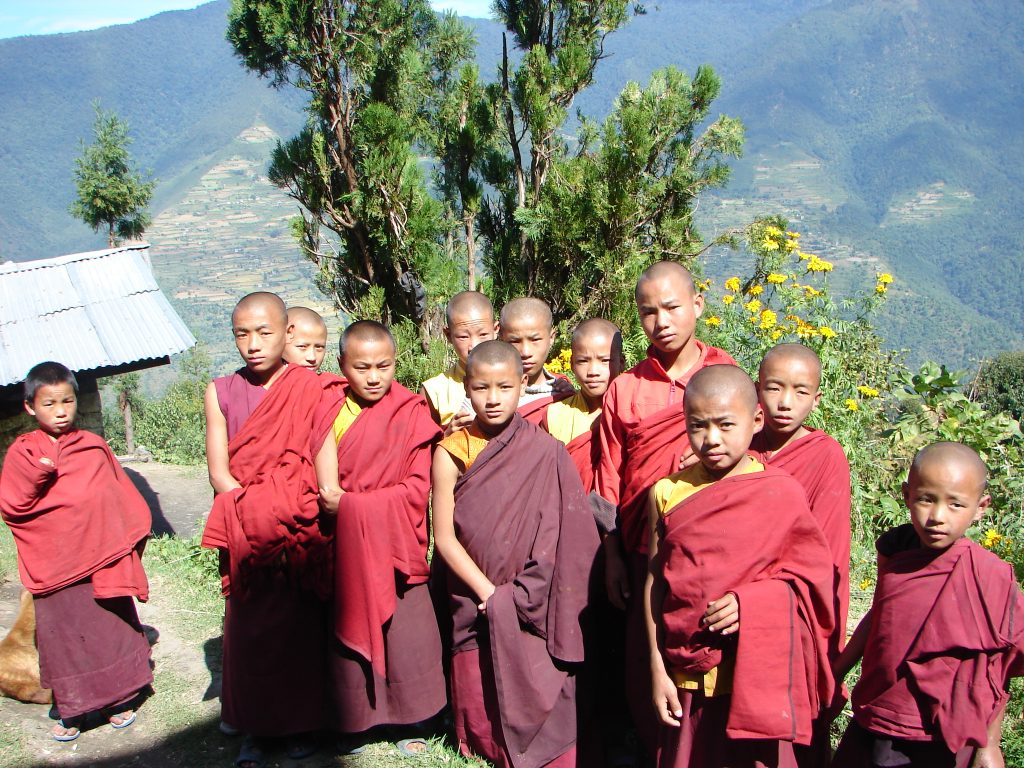
Bhutan’s Gross National Happiness (GNH) is a unique development philosophy prioritizing holistic well-being over economic growth. Introduced by King Jigme Singye Wangchuck in the 1970s, GNH focuses on sustainable socio-economic development, environmental conservation, cultural preservation, and good governance. It encompasses nine domains: psychological well-being, health, education, time use, cultural diversity, good governance, community vitality, ecological diversity, and living standards. The GNH index guides policy to ensure balanced progress. While praised globally for its innovative approach, GNH also faces challenges in measurement and implementation, highlighting the complexities of promoting comprehensive well-being.
Weather and Climate
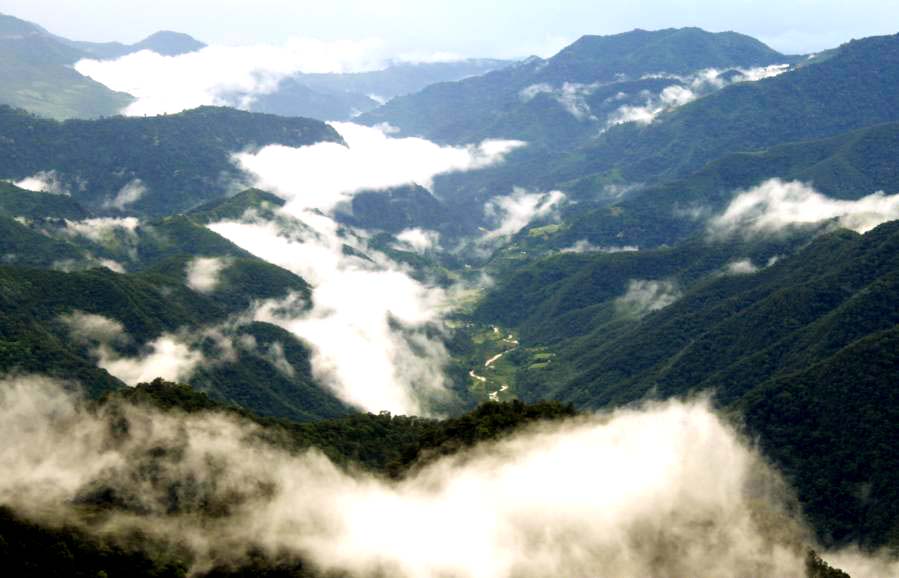
Bhutan experiences four distinct seasons, varying with altitude. Spring (March-May) brings pleasant weather and blooming flowers. Summer (June-August) is the monsoon season, characterized by mild, humid, and rainy conditions. Autumn (September-November) is cool and dry, while winter (December-February) is cold, especially in higher altitudes. Thimphu, at 2,200 meters, sees summer temperatures of 15-26°C and winter temperatures of -4 to 16°C. Central Bhutan is cooler, with colder winters, while southern Bhutan is hot and humid year-round, with temperatures from 15-40°C. Rainfall and snowfall vary by region and season.
Textile
Bhutanese textiles are a vibrant and integral part of the nation’s cultural heritage, showcasing intricate craftsmanship and traditional techniques passed down through generations. Renowned for their vivid colors, rich patterns, and unique designs, these textiles are often woven by hand using natural fibers like silk, cotton, and yak hair. The art of weaving is predominantly practiced by women, and each region of Bhutan has its own distinct styles and motifs. These textiles are not only used for clothing but also play a significant role in religious and ceremonial contexts, reflecting Bhutan’s deep cultural and spiritual traditions.
Flora and Fauna
Bhutan is home to more than 200 mammal species, ranging from iconic animals like tigers and elephants to rare ones like snow leopards and Takin. Some species are in danger, with one critically endangered, ten endangered, fourteen vulnerable, and three near-threatened.
This variety is due to Bhutan’s unique position at the convergence of two major biogeographic regions and its wide range of altitudes—from sea level to over 23,000 feet—providing diverse habitats for mammals to thrive.
The Eastern Himalayas are famous for their abundant plant life. Bhutan alone boasts over 5,400 plant species, including 300 types of medicinal plants, with some resilient species thriving even at altitudes exceeding 3,700 meters.
Below 800 meters, lush sub-tropical evergreen forests harbor a unique diversity of plants. Moving up, between 900 to 1,800 meters, you’ll find sub-tropical grasslands and forests. As you ascend further, the tropical vegetation transitions into dense forests featuring oak, birch, maple, magnolia, and laurel.
Beyond 2,400 meters, you’ll encounter spruce, yew, and weeping cypress trees. Higher still, up to the tree line at about 5,500 meters, you’ll find low shrubs, rhododendrons, Himalayan grasses, and colorful flowering herbs.
Some of the endangered species found in Bhutan include:
- Royal Bengal Tiger (Panthera tigris tigris)
- Snow Leopard (Panthera uncia)
- Asian Elephant (Elephas maximus)
- Red Panda (Ailurus fulgens)
- Takin (Budorcas taxicolor whitei)
- White-bellied Heron (Ardea insignis)
- Himalayan Black Bear (Ursus thibetanus)
- Himalayan Musk Deer (Moschus chrysogaster)
- Golden Langur (Trachypithecus geei)
- Rufous-necked Hornbill (Aceros nipalensis)
- White-winged Duck (Asarcornis scutulata)
Bhutan’s diverse terrain and abundant biodiversity provide a home for a wide variety of exquisite and unusual flowers. Bhutan has a variety of unusual flowers, some of which are:
- Blue Poppy (Meconopsis grandis): Known as the national flower of Bhutan, the Blue Poppy is a rare and elusive flower that blooms in high-altitude regions, particularly in the Himalayas.
- Rhododendrons
- Himalayan Blue Sheep (Delphinium brunonianum)
- Cobra Lily (Arisaema nepenthoides)
- Himalayan Slipper Orchid (Paphiopedilum fairrieanum)
- Primula denticulata
- Edelweiss (Leontopodium nivale)